Download PDF Poets in a Landscape (New York Review Books Classics), by Gilbert Highet
If you are still back to back to locate the best publication to read, we have actually supplied a terrific publication as prospects. Poets In A Landscape (New York Review Books Classics), By Gilbert Highet as one of the referred publications in this write-up can be delighted in currently. It is not only about the title that is really interesting and also attracts individuals ahead reading it. And why we offer this publication to you is that it will certainly be your good friend along your free time.
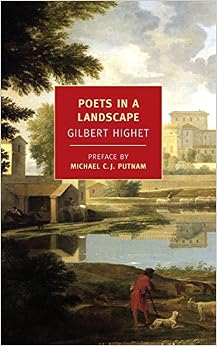
Poets in a Landscape (New York Review Books Classics), by Gilbert Highet

Download PDF Poets in a Landscape (New York Review Books Classics), by Gilbert Highet
In this age of modern period, making use of net need to be made best use of. Yeah, web will certainly help us very much not just for essential point but additionally for day-to-day activities. Lots of people now, from any type of degree can use internet. The resources of web connection could additionally be enjoyed in lots of areas. As one of the advantages is to obtain the online book, as the globe window, as many individuals suggest.
Feel so happy to locate and wait this publication finally comes show up. It is the suggested enough for you that are still puzzled to obtain new analysis publication. When other publications featured the sign of best seller, this book is greater than it. This is not only about the very best seller one. Poets In A Landscape (New York Review Books Classics), By Gilbert Highet is one publication that will make you end up being ideal person, minimally the far better person after obtaining the lesson. The lesson of this publication is generally as exactly what you need to do.
No, we will certainly share you some ideas concerning just how this Poets In A Landscape (New York Review Books Classics), By Gilbert Highet is referred. As one of the analysis publication, it's clear that this publication will certainly be definitely performed considerably. The relevant subject as you require now becomes the man factor why you must take this book. In addition, getting this book as one of analysis products will certainly boost you to get more information. As known, more details you will certainly get, a lot more upgraded you will certainly be.
By in this manner, you can be much better to have spirit to review. The easy way to obtain, bring, and also delight in reading of this publication is also creating when getting it in soft file. By saving in some tools, you are likely having greater than a publication. So, make sure that you download and take pleasure in the Poets In A Landscape (New York Review Books Classics), By Gilbert Highet to review. The link that we provide will certainly aid you in eating the right book there.
Review
“A guidebook to present-day Italian scenes and an introduction to seven of the great Latin poets, whom we meet on their own grounds…the places and people we meet on this very special trip make this extremely attractive for all who love the beauties of nature and at the same time like to remind themselves of the great works of men and the glories of past civilizations.” –Paul Jordan Smith, Los Angeles Times“A walk back in time to a Roman Italy of 2,000 and the lives of seven Latin poets.” –Jacob Deschin, The New York Times“...this book has established itself as a minor classic, or quite simply as a classic…The writing is sensitive and notably intelligent, backed up by Highet’s competent verse renderings from the Latin, and to cap it all he gives a pen-picture of Rome itself at its imperial apex. Here is scholarship in the old sense, humane, unpedantic, open-minded and totally free of academic jargon.” –Brian Fallon, The Irish TimesA “delightful, infectious book…Highet writes racily about the Latin poets he admires, putting each in situ with the airy dash now frowned upon in today’s dourer academy. He knows much. And enthuses even more. This is a labor of love that is never labored. Highet’s attention to prosodic details gets us within earshot of his authors.” –The Herald (Glasgow)“Highet has written what is surely one of the most unusual travel books ever published. It is in one sense an account of a journey to Italy, complete with pictures taken by the author’s ‘faithful Rolleiflex.’ In another sense it is the journal of a trip into the Italy of the past…translated by the author with loving care and capturing as faithfully as possible the meter and structure of the oritinal work.” –Robert Kirsch, Los Angeles Times“This attractive and pleasantly educational work...includes some lucid and enlightening critical interpretation…In tracing the birthplaces and homes of his seven poets Mr. Highet has written sketches of many places in Italy outside the orbit of most tourists…Poets in a Landscape is a strikingly handsome example of bookmaking.” –Orville Prescott, The New York Times “With great love and scholarship…he brings his poets and their troubles fully alive.” –Stevie Smith“Highet is that rarest of finds, the scholarly homme complet, full-blodded, cultured, completely human in his learning.” –The Times Literary Supplement (London)“Unlike many scholars he succeeds in getting into the skin of his poets, finding the man in the style…there he can detect a writer’s true self.” –Cyril Connolly
Read more
About the Author
Gilbert Highet (1906–1978) was born in Glasgow, Scotland, to a middle-class family. He showed an early facility with Latin and Greek, reading Homer, Virgil, and Aeschylus for pleasure by the time he was sixteen. He attended Glasgow University, and later Oxford’s Balliol College, sweeping up most of the available prizes and scholarships along the way. In 1937 Highet joined the faculty of Columbia University, becoming a full professor at thirty-one. He taught at Columbia until 1972 (with the exception of a period during WWII, when he was stationed as an officer in Washington, D.C. and later assisted in the return of looted goods in Europe), becoming a legend for his animated and inspiring lectures. A very public intellectual, Highet served on the boards of Horizon magazine (1958–77) and the Book-of-the-Month Club (1954–78), was chief literary critic for Harper’s (1952–54), and hosted a cultural affairs radio program, People, Places, and Books (1952–59), that was broadcast on more than three hundred stations in the U.S., Canada, and the U.K. Highet wrote, translated, or edited some twenty books, of which The Classical Tradition (1949) and The Art of Teaching (1950) remain the best known. He was married to Helen MacInnes, a successful writer of espionage novels, from 1932 until his death from cancer in 1978. Michael C.J. Putnam is MacMillan professor emeritus of classics and comparative literature, Brown University. Among his recent books are Poetic Interplay: Catullus and Horace and Jacopo Sannazaro: The Latin Poetry. In May 2009 he was awarded the Centennial Medal by the American Academy in Rome. He is a member of the American Academy of Arts and Sciences and of the American Philosophical Society.
Read more
Product details
Series: New York Review Books Classics
Paperback: 296 pages
Publisher: NYRB Classics; Main edition (March 16, 2010)
Language: English
ISBN-10: 1590173384
ISBN-13: 978-1590173381
Product Dimensions:
5.1 x 0.8 x 8 inches
Shipping Weight: 10.4 ounces (View shipping rates and policies)
Average Customer Review:
4.8 out of 5 stars
10 customer reviews
Amazon Best Sellers Rank:
#733,757 in Books (See Top 100 in Books)
The word ‘landscape’ in the title attracted me to this book, as well as some regret that in high school and college, I had passed up the opportunity to study Latin and the Classics. People today, whether in the American West or not, are concerned about the environmental survival of the land, but also how individuals perceive the landscape with themselves in it. In college one can’t study the Romantic era of poetry without hearing about Virgil, Horace, and Ovid, and particularly Juvenal--whose work has entered the modern consciousness. But, the delightful surprise for me was the chapter on Propertius and particularly the section “The springs of Clitumnus†near Assisi, Italy. The author, Gilbert Highet, creates a sense of wonder as he quotes from Propertius, then Highet makes a claim statement, “All water in motion is wonderful,†then with sensory delights takes us directly to the springs where “Cool, copious fresh water†rises “out of dry earth under a hot sun.†Then Highet puts us in the scene: “Gazing into the larger pools, we see wells. The bottom sinks away, here and there, into a conical recess about five feet broad . . . filled with equally clear, though darker, water†(101). In other words, not only does the reader gaze into the landscape, it gazes into him. Not only are you in the landscape, it is in you. That is the writer’s art.While reading the chapter on Catullus, I was immediately struck by the poet’s obsession with sexuality and the game of cat and mouse--shall we say. I was reminded once again that well-to-do women and men were limited by ancient Rome’s class and caste system. There were no business professions, no middle-class mobility for men or women, no honorable work ethic (not to mention slavery was legal). Thus, the poetry on chasing after sex seems, at times, not to have a place in our contemporary society. As a result, the most interesting poets are the two or three with low-class or slave origins.The most enduring writer might be Juvenal who contrasted city life--the debauched hypocritical Rome--with honest, quiet country life. This conflict between town and country still endures and is largely valid, and yet poets, like other people, often find country life tedious. The most haunting chapter of the book is the final one titled “Rome,†in which Highet meditates on the city ruins and the permanent changes in the landscape. Not only do walls of cities crumble, but beloved places shift and are forgotten. Writers and poets--in an imperfect world of slavery and injustice--try to immortalize the quiet places. The “Rome†chapter is not about the political fall of empire; it’s about the slow natural processes--plants, shifting ground, earthquakes—that overtake buildings and monuments.There is much here for the contemporary reader to mediate upon. What worries me, now, is how quickly a bulldozer and real estate development can destroy beloved countryside; and how thoroughly tourist advertising can commercialize and cheapen a place. Not so with Rome.
Read the portion on Ovid for a study group I belong to that is reading Ovid's Metamorphoses. The amount of information was amazing and written in an easy to read and enjoyable way.
All of these reviews point up important charms of Highet's undertaking, but I would note that they are more than the sum of their parts. Taken together, this excursion into social and cultural history, ancient and modern geography, sociology, linguistics, poetics, architecture and psychology is what intellection is all about. It is a "wow" and an accessible one for non-specialists. I am a professor of ancient history and will promote this to my students, not to increase their knowledge of history, but to increase their pleasure in history and introduce them to why some of us love and value it for PRESENT understandings and insights.
One of the pleasures of studying Latin is the beautiful, literate prose used by the authors of things Roman. Gilbert Highet is a pleasure to read whatever his subject. Reading a book like this makes me sigh for a (probably fictitious) past when education meant polish and and a light touch as well as knowledge.
The opening to chapter 1 on Catullus is one of the best prose paragraphs in literature - fiction or nonfiction. "The woman was unworthy. The poet died. The word lives." Wow.
Reviewer # 3 mentions the lack of photographs in some editions.I own the Akadine Press, 1996 edition (see # 2 under "all editions") and can verify that this edition does include the black and white photos of landscapes, buildings, etc. -48 photos total.
The New York Review has just re-issued Gilbert Highet's charming 1951 book, POETS IN A LANDSCAPE. Highet was a professor of classics at Columbia, and loved the Roman poets (Horace, Virgil). He also deeply loved Italy. In this book, he visits the home of each of the poets, and writes about it and their poetry. It is a terrific book: erudite and thoughtful, and is guaranteed to make you want to go to Italy. It is also -- by a huge margin -- the best book about poetry I have ever read.
Highet is wonderful. Clear, accessible writing that makes the Classical world come to life. Reading this book made me want to dive into the Odes and other works he describes. Phooey on Postmodernism.
Poets in a Landscape (New York Review Books Classics), by Gilbert Highet PDF
Poets in a Landscape (New York Review Books Classics), by Gilbert Highet EPub
Poets in a Landscape (New York Review Books Classics), by Gilbert Highet Doc
Poets in a Landscape (New York Review Books Classics), by Gilbert Highet iBooks
Poets in a Landscape (New York Review Books Classics), by Gilbert Highet rtf
Poets in a Landscape (New York Review Books Classics), by Gilbert Highet Mobipocket
Poets in a Landscape (New York Review Books Classics), by Gilbert Highet Kindle

0 comments: